Sustainable agriculture in oasis areas: preserving tomorrow's oasis
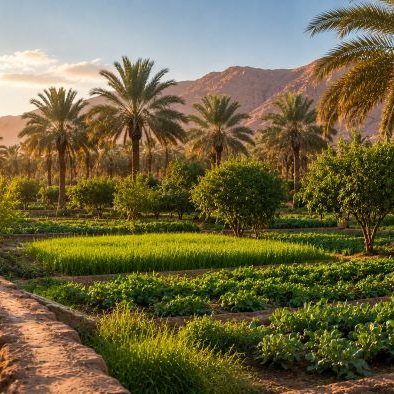
The oasis is a unique ecosystem, the fruit of centuries of human ingenuity. Around the date palm is organized a layered farming system — palms, fruit trees, market gardens — of remarkable efficiency. But this model is now threatened by climate change and pressure on resources.
Water, the central resource
The sustainability of the oasis depends first on water management. Rehabilitating the khettaras (traditional drainage galleries), combined with modern localized irrigation techniques, limits losses and distributes the resource fairly among farms.
Agroecology serving the oasis
The oasis system is agroecological by nature: the palm layer shades the crops below, creating a favorable microclimate. Strengthening this model involves:
- composting frond and crop residues;
- diversifying crops for food security;
- reducing chemical inputs in favor of organic amendments.
Fighting desertification
Palm groves act as a barrier against the advance of the desert. Preserving and extending plant cover, stabilizing soils and restoring degraded groves are priorities that are both ecological and economic for oasis communities.
A shared responsibility
The transition to a sustainable oasis mobilizes producers, cooperatives, researchers and public authorities. It requires investment, but also the sharing of knowledge between generations and territories.
The RAMD Date Palm Congress 2026 will devote an entire thematic track to oasis sustainability, bringing innovation and heritage preservation into dialogue.
Stay informed about upcoming RAMD events
Relive the October 1, 2026 edition in Erfoud and follow upcoming editions on LinkedIn.